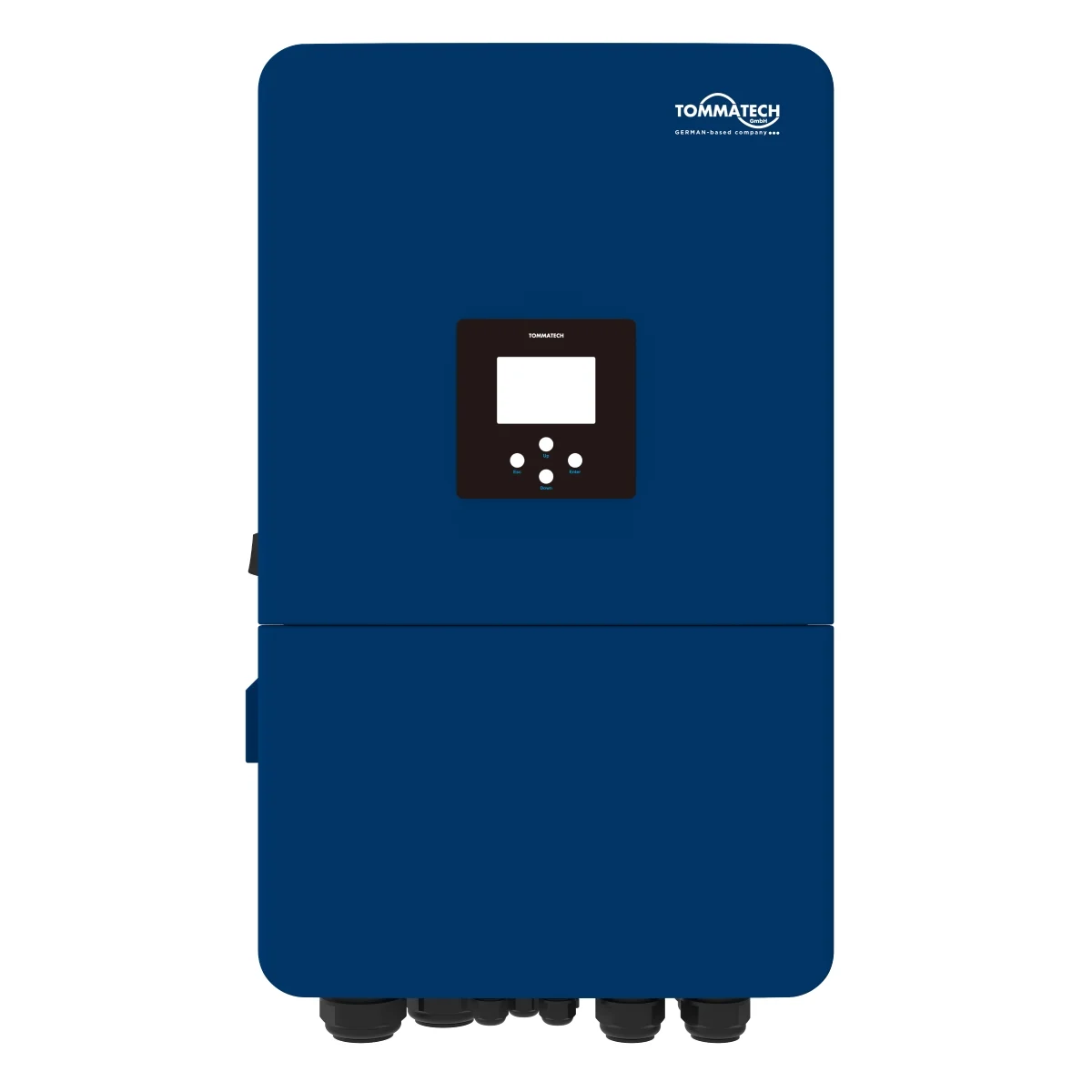
Deye 80 kW Hybrid Three-Phase Inverter (HV) SUN-80K-SG01HP3-EU
Deye 80 kW three-phase hybrid inverter for HV battery storage in factories, hotels and farms. Free site survey and turnkey installation by Aden Solar.
 Deye ESS dealer
- Model
- SUN-80K-SG01HP3-EU
- Rated power
- 80 kW
- Phase
- Three-phase
- Battery type
- High-voltage (HV) lithium-ion
- Application
- Commercial and industrial
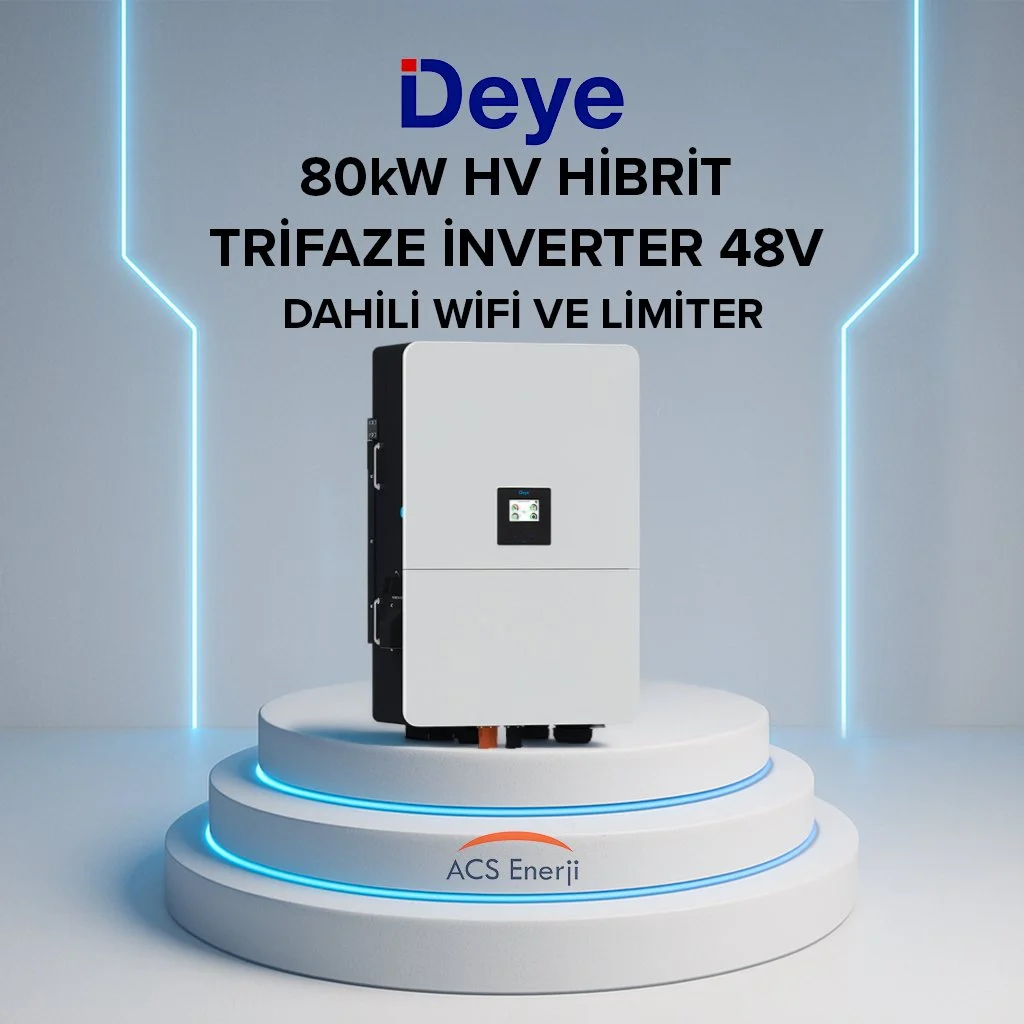
The Deye SUN-80K-SG01HP3-EU is an 80 kW three-phase hybrid inverter that works with a high-voltage (HV) lithium battery. One of the most powerful models in the range, it is built for heavy-duty, plant-scale applications. By managing solar, grid and battery in one unit, it cuts outage risk and grid costs for large sites.
Key features
- 80 kW rated output, three-phase grid connection.
- High-voltage (HV) lithium battery support: lower current and less heat loss at the same power.
- Heavy-duty, plant-scale design for continuous high loads on large rooftop and ground-mounted plants.
- Hybrid operation: runs with the grid when present and from the battery during an outage; surplus generation is stored.
- Smart energy routing: generation feeds the loads first, then the battery, and only then the grid.
Where it is used
- Factory and workshop rooftop plants
- Cold storage facilities and hotels
- Agricultural irrigation and greenhouses
- Commercial buildings that need uninterrupted power
Installation with Aden Solar
Aden Solar sizes the inverter and battery capacity from your site’s load profile, outage risk and roof area. We deliver turnkey installation: free site survey, string design, HV battery selection, switchboard and cabling, installation, grid connection, monitoring setup and commissioning. We are also your contact for after-sales technical support.
Frequently asked questions
What is a hybrid inverter?
A hybrid inverter manages energy flow between solar panels, the grid and a battery in one device. Generation feeds the loads first, the surplus charges the battery, and critical loads keep running from the battery during an outage.
What is the difference between HV and LV batteries?
HV (high-voltage) batteries run at hundreds of volts, so the same power needs less current, thinner cables and loses less heat, which suits larger systems. LV (48 V) systems are common at household scale, easy to expand and cost-effective.
How much battery does a 80 kW inverter need?
It depends on how many hours and which loads you want covered during an outage. Aden Solar lists the critical loads during the site survey, reviews your daily consumption and calculates the required kWh in writing.
What happens during a power cut?
When the grid fails, the inverter switches automatically to battery supply; during the day the panels power the loads and recharge the battery. The loads to back up are chosen in the survey and the switchboard is split accordingly.