Orbit 6.2 kW Pure Sine Wave Off-Grid Inverter – Non-Parallel
Orbit 6.2 kW pure sine wave off-grid inverter (non-parallel): 120 A MPPT, 60–500 V PV input, Wi-Fi monitoring. Installed turnkey by Aden Solar.
 Orbit Enerji dealer
- Rated power
- 6.2 kW
- Type
- Off-grid inverter
- Output waveform
- Pure sine wave
- PV input range
- 60–500 V DC
- MPPT charge current
- 120 A
- Parallel operation
- No (single unit)
- Communication
- RS232 / RS485, Wi-Fi dongle
- Operating modes
- UTL / SOL / SBU / SUB
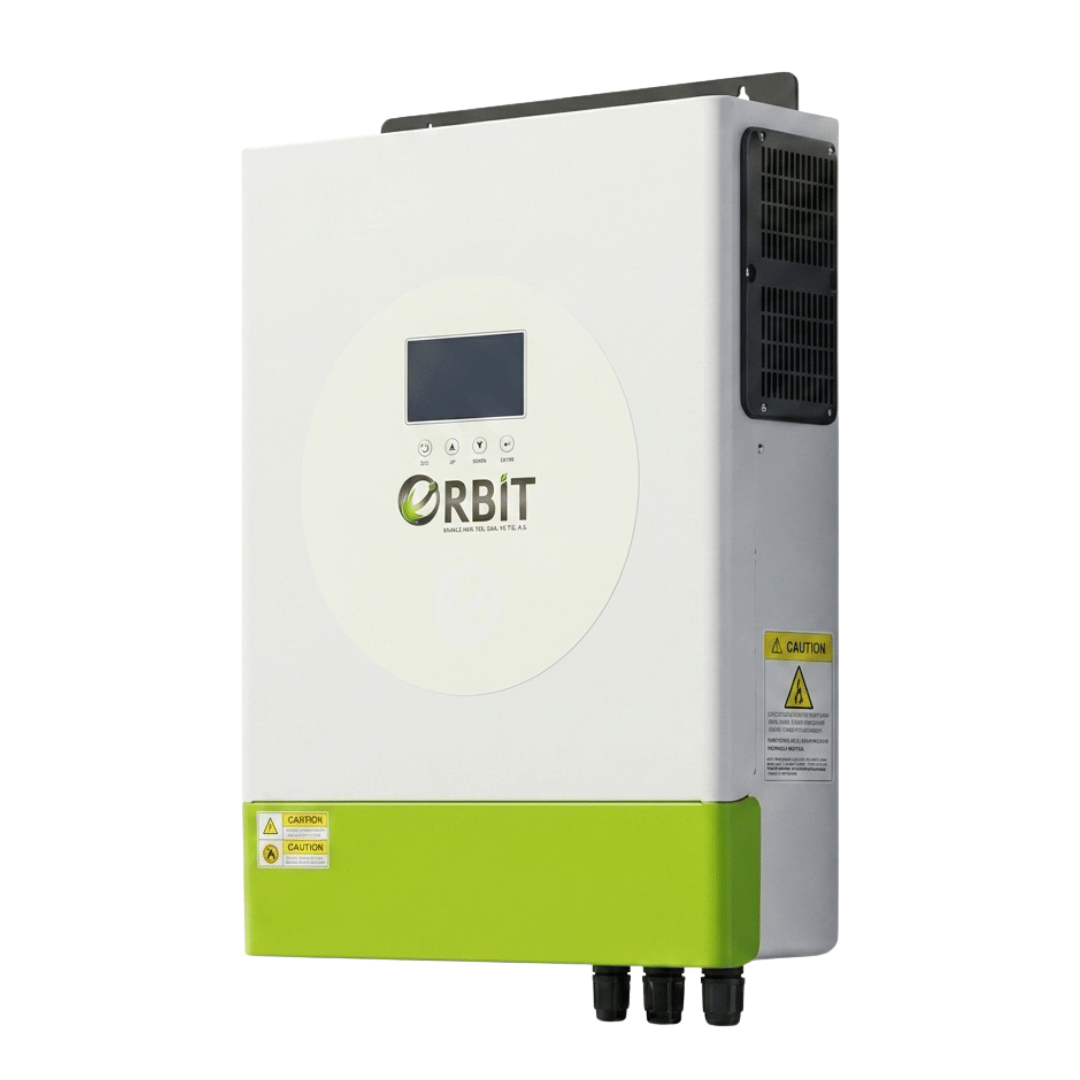
The Orbit 6.2 kW Pure Sine Wave Off-Grid Inverter (non-parallel) is a strong, stable inverter for stand-alone solar systems that run on a single unit. With a 60–500 V DC PV input range and 120 A MPPT charge current, it gives homes and businesses pure sine wave power independent of the grid, at a lower cost where parallel operation is not needed.
Key features
- 6.2 kW of pure sine wave power: an off-grid solution for homes and businesses.
- 60–500 V DC PV input range and 120 A MPPT charge current.
- A more cost-effective design for systems that do not need parallel capacity.
- Can power loads directly from the solar panels.
- RS232 / RS485 and Wi-Fi dongle support for remote monitoring.
- Overload, short-circuit, over-temperature and low-voltage protection.
- UTL, SOL, SBU and SUB source-priority modes.
Where it is used
- Off-grid country houses, cabins and farms
- Agricultural irrigation and pump systems
- Homes and businesses with frequent outages
- Building sites, warehouses and remote sites
Installation with Aden Solar
Aden Solar sizes the inverter, the panel strings and the battery bank from your consumption. We deliver turnkey off-grid installation: free site survey, panel and battery selection, mounting, wiring, commissioning and after-sales support. We are your contact for warranty and technical support.
Frequently asked questions
What is an off-grid inverter?
An off-grid inverter converts direct current from solar panels and batteries into the 230 V alternating current used at home, and runs without the grid. Where grid or generator power exists, it can use it as a backup source.
What is the difference between parallel and non-parallel inverters?
Parallel inverters let several units work together to scale up power. A non-parallel model runs on its own and is the more cost-effective choice where the power need will not grow.
Why does a pure sine wave inverter matter?
A pure sine wave inverter produces the same waveform as the grid. Fridges, pumps, computers and sensitive electronics run smoothly and quietly, and motor loads do not overheat.
What do the SBU, SUB, SOL and UTL modes mean?
They set which source is used first. SBU uses solar, then battery, then grid; SUB goes from solar to grid before the battery; SOL gives priority to solar and UTL to the grid.